
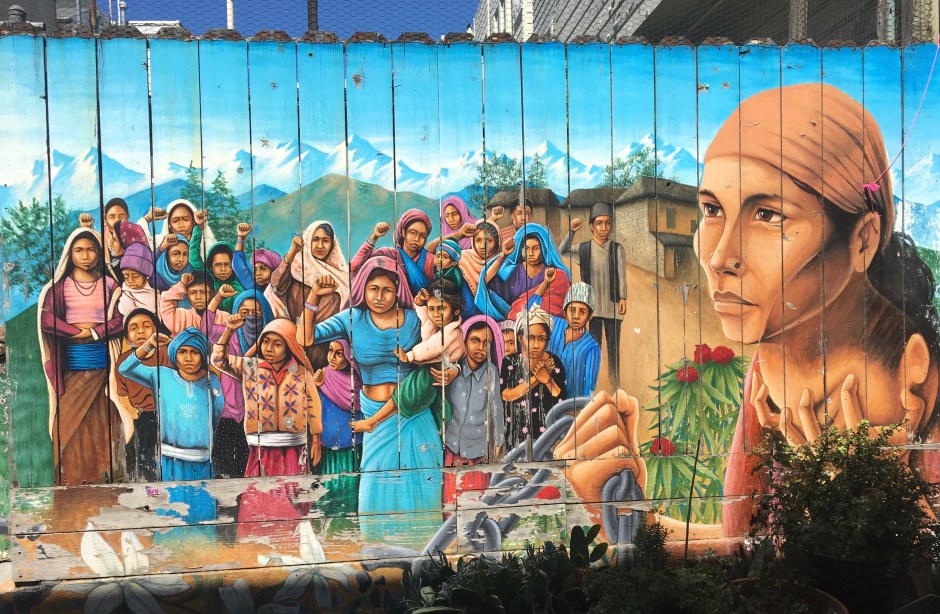
San Francisco as a place of iconic cultural movements, and its atmosphere of societal change today.
Anna Price
Lonely Planet opens their webpage on San Francisco by claiming that this city is ‘fog-shrouded icons’, before going on to mention warm layers, glitter and ‘fabulousness’. Clearly nodding to San Francisco’s micro-climate of fog and wind, along with its iconic relationship with gay pride, Lonely Planet only begins to scratch the surface of California’s most innovative city.
Only a 40 minute drive from infamous Silicon Valley, San Francisco is the home-town of tech-gurus, risk-taking entrepreneurs and forward-thinking hipsters. It is a habitat for creators and visionaries with quirky bars, museums, restaurants and theatres. San Francisco cultivates creativity and it feels modern. It feels colourful, diverse, inviting and progressive. All are welcome. In an America shrouded in hate, violence, borders and walls, San Francisco feels hopeful. This sense of liberation is unsurprising, considering California’s Democrat stronghold since 1992; but in a political environment that often looks more to the past than to the future, it is refreshing to visit a city that has not altered its avant-garde position.
Fifty years on from the Summer of Love of 1967, and still with the faint scent of marijuana in the air, messages of social plight are still prevalent, articulated powerfully by the exhibition at the de Young museum in Golden Gate Park. With lamp posts displaying the progression of social movements from 1967 to 2017, it becomes clear we are still fighting for the same thing. In 1967, it was Civil Rights, now it is Black Lives matter; in 1967, it was Free Love, now it is Marriage Equality. Liberation, freedom, inclusivity, peace and understanding. Compassion. Humanity.


San Francisco is reminiscent of London in the way that different areas have different atmospheres. While London has Leicester Square, Shoreditch, Greenwich, Camden, Chelsea, Westminster etc, San Francisco homes the Castro, the Mission District, Haight-Ashbury, North Beach, the Tenderloin, Sunset District, Presidio etc. All of San Francisco’s districts seem united by colour and visual representations of social movements. The murals and street art in Mission are iconic, while the Castro was one of the first gay communities in the U.S. Haight-Ashbury is the birthplace of the swinging 60s counter-culture in and amongst beautiful Victorian style houses; the most iconic of which are the Painted Ladies who found fame with Full House in the 90s. These parts of San Francisco are a cultural palimpsest, marking different societal movements and crazes of past and present.


Conversely, the North Shore of the city tends to be more commercial, with the likes of Fisherman’s Wharf, Pier 39 and of course access to Alcatraz. These are tourist icons of the city, one-off must-sees, but generally over-priced areas. Union Square, Market Street and the Financial District are equally as busy with shoppers and tech-men as the business hub of the city thrives. Yet underlying this affluent area, is the Tenderloin. This is the location of a lot of the homelessness, addiction problems and poverty within the city. Despite San Francisco’s progressive and foreward thinking outlook, it is one of the worst places for homelessness. In California in general, the number of people experiencing homelessness is upwards of 134,000, compared to New York State’s 89,000. This, paired with the incredibly high real-estate prices, does tint the shine of San Francisco and slightly undermine the city’s glorious social plight. The Tenderloin, nevertheless, is still home to some incredible cultural history – including the basis of the jazz movement as well as individuals who shaped, and importantly continue to help, the community as it stands today. To learn more about the Tenderloin, its posture within the city and why it is not a place that should be tucked under the carpet, I would highly recommend the Tenderloin Walking Tour.


Walking in San Francisco is almost second nature, it certainly is not an easy city to drive, and most places are easily accessible on foot, except perhaps the climb to Coit Tower. For routes less dominated by tourists, there are hiking trails along the North West coast of the city, from Land’s End to Sutro Heights. Within these trails is the Legion of Honour, one of the Fine Arts museums of San Francisco. The museum has a rich European Art collection, holding artists such as Rubens, Monet and Rembrandt, as well as large sculpture installations, including Rodin’s famous ‘The Thinker’. This area is removed from the city and provides a respite from the hustle, bustle and loud nature of the inner city. The views across the bay to the Golden Gate Bridge provide a peaceful setting to immerse in this hidden gem of a museum.


San Francisco is layered with cultural and societal movements of bygone times that foreground and spur today’s, and future generation’s, pursuits of social justice. San Francisco is youthful and ambitious, but the increasing successes and wealth of its inhabitants will drive city prices higher creating an underlying concern that, unproductively and counter-intuitively, these expenses will further the social and poverty divide within the city. Nevertheless, the murals and people of the city are living, physical reminders, for the city and for visitors, of the quest for love above all in times of turmoil, and the pursuit for what is right.
Golden Daze: 50 Years on from the Summer of Love
San Francisco: 50 Years on from the Summer of Love
All pictures are my own unless otherwise credited. Permission must be obtained before any reproduction and credit must be issued in any reproduction.

