
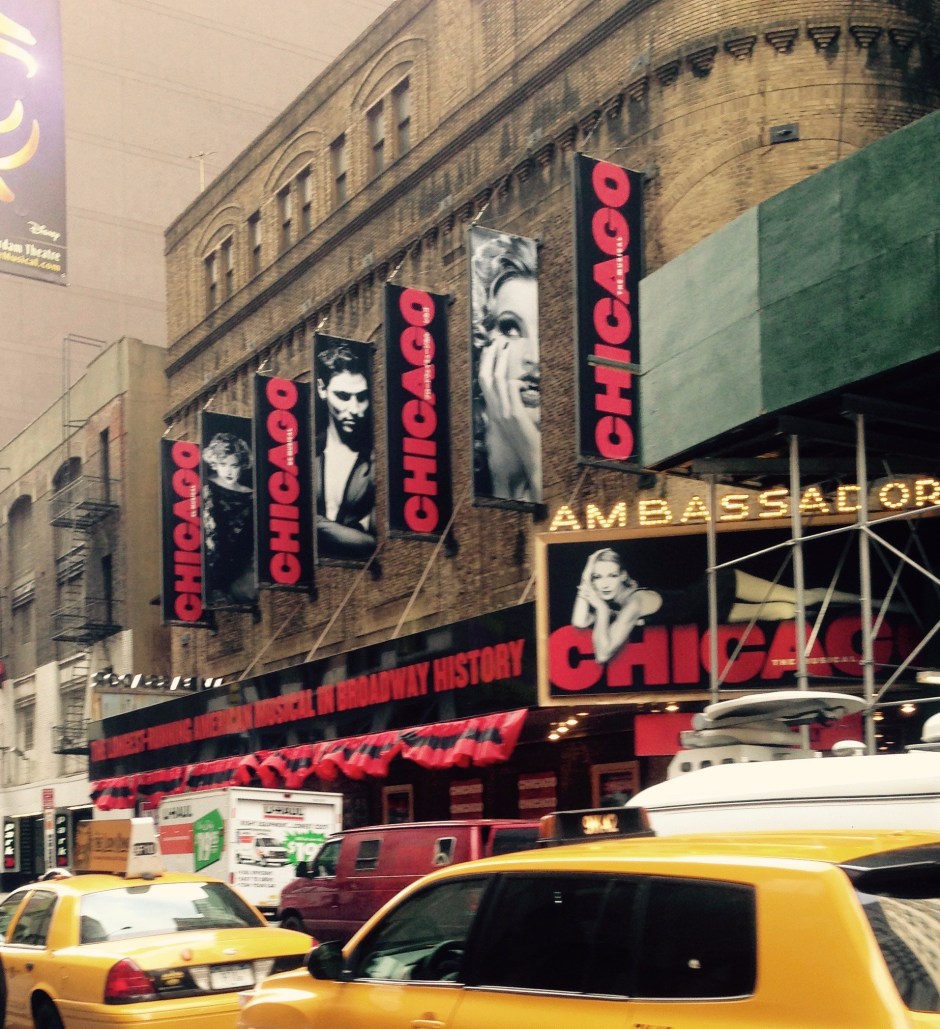
This week’s matinee performance of ‘Chicago’, on Broadway, was completely worth the wait. From first watching the movie aged eleven, having learnt all the songs word for word by age twelve and then having listened to the soundtrack on repeat in the car for hours on the drive to the south of France, I would have called myself a Chicago enthusiast. I was only lacking in the fact that I had never seen it performed on stage in its original glory, until this week.
The entire production was not only visually stunning with the world class dancing and singing, but also incredibly entertaining in terms of the acting and interaction with the audience. It was very apparent throughout the whole performance that we, the audience, were watching a show – there was no attempt to make the audience forget their place and draw them into the plot: they were the actors and we were the observers. In this way, the performance was very aware of itself and carried this self-awareness throughout, using techniques which highlighted this further: such as pantomime-like narrators, over-exaggerated movements, slapstick routines and the farcical use of a man dressed as a woman singing falsetto. These elements not only contributed to the comedic element of the performance but, combined, they also constitute that of a Brechtian performance. This is furthered by the fact that all members of the cast were on stage at the same time – lining it with the chairs and bringing them on when they needed to be used. This is reminiscent of a Brechtian performance of Medea, where the actors used rope to identify their acting space, waiting on the outside of it, with the props, when they weren’t is use. It was all these elements combined which epitomized the comedy and heightened the connection with the audience.
This humour was not apparent within the movie, primarily due to the fact that there was no live audience. A live audience is pivotal in a production as it can change the way in which actors can manipulate the text and play to the audience’s desires. This difference between movie and performance is similar to the way in which Shakespeare’s text has a different effect on the reader than when it is performed on stage, due to the way in which the actors use their tone of voice, body language and interactions to support the words on the page. This is not the only similarity between ‘Chicago’ and Shakespearean plays as the use of a man dressed as a woman was very common in Shakespearean and Restoration theatre, acting almost as an element of comic relief, enhancing the connection further.
Although the acting, dancing and singing were outstanding, the orchestra made the performance. The opening jazz number set the tone for the rest of the production; the use of the mute with the trumpet and growling saxophone combined with the visually stunning and intense dance combinations sent shivers down my spine and brought tears to eyes. The conductor herself was brilliant, becoming a part of the performance and a member of the cast, bridging the divide between the orchestra and the actors – equalizing them all as performers. This was aided by the fact that the jazz band was placed on stage, physically alienating any divide of space: musicians, dancers and actors were integrated.
I think it is clear that this production of ‘Chicago’ utterly lived up to all expectations, even if some elements were different to the movie, as they only added to the performance and made it a fabulous afternoon in the city.
 Under The Cypress Tree