Anna Price
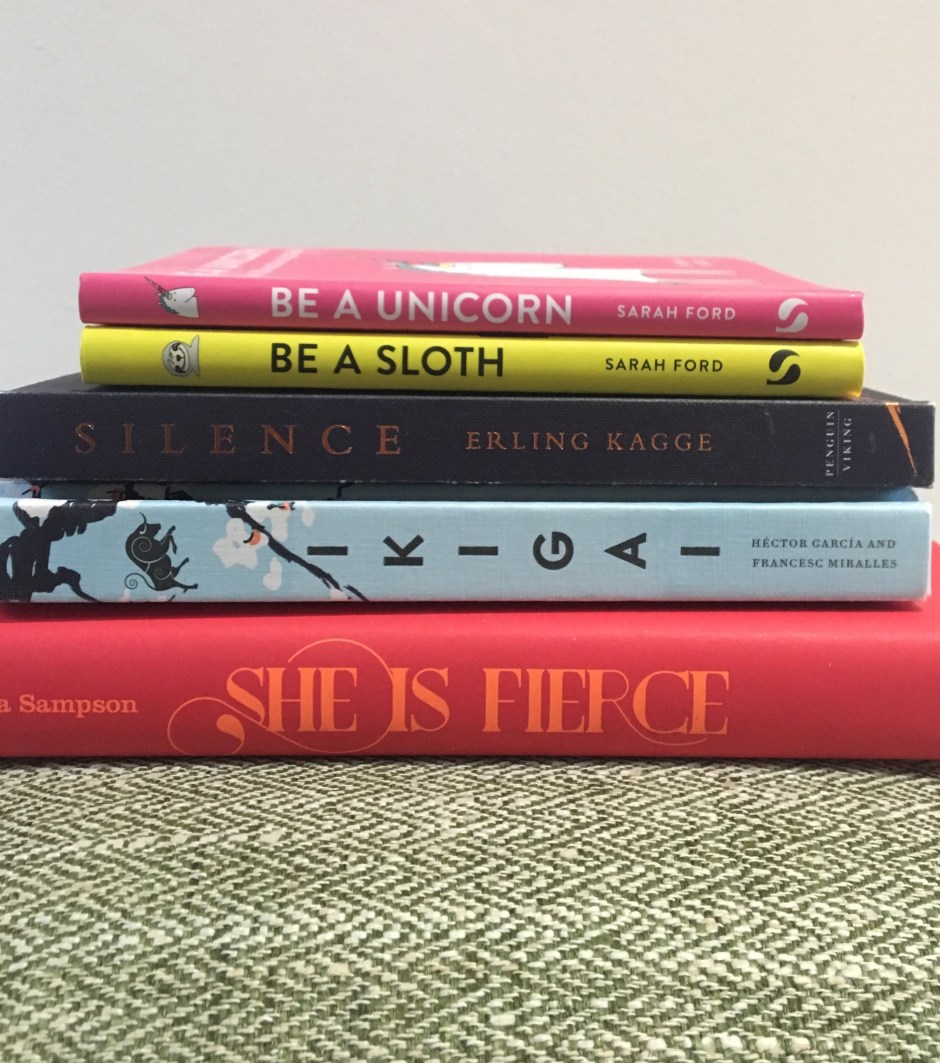
February is a tough month. The motivation of January’s resolutions have faded, the weather has not much improved and the colour of spring still seems far away. Therefore, this month, I have been reading books that inadvertently encourage emotional wellness and lean towards self-care.
Ever-popular on social media, self-care currently seems lost in commercialism and performative acts, while its importance, and existence, in connection with mental health has lost focus. As I have learnt through my reading this month, it is important to remember that self-care is more than boomeranging your bath bomb, showing off your face-mask and proving your serenity to your Instagram following. Self-care is about detaching and reconnecting. Taking the time to spend with yourself, your friends and the natural world. It is not selfish or self-indulgent, but it is about physical and mental wellbeing. Equally, it does not have to be an intense psycho-analysis of your feelings. Self-care is personal and looks towards the future: actions that are not short-term bursts of release, but decisions that benefit your body and soul in the long term.
The books I have been reading this month have offered insights and suggestions into enacting self-care and wellbeing. For me, the act of reading itself facilitates the calm required to take a step back, gain some perspective and move forward happier.
Articles with more information on self-care, its importance and misconstrued purpose are at the bottom of this post.
Silence: In the Age of Noise
Erling Kagge, 2017
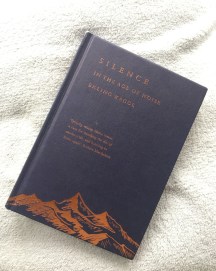 Erling Kragge’s Silence is an examination into silence, its mode and existence in the world around us, and more importantly, in ourselves. Kragge’s text follows his fifty-day solo walking expedition in the Antarctic, the stripping back of white noise, the perception of the natural world and the growing relationship with himself.
Kragge advocates the need to find inner silence, and inner peace. He notes the improbability of complete silence in our day to day lives, but asks us to remove the chatter on our devices, the noise of social media streams and our constant availability via email and messenger. Kragge explores how silence is a luxury that cannot be bought, only found; and with this luxury comes peace and invaluable calm. The text provides examples and case-studies, as well as advice on meditation and physical exercise. Silence is an important reminder to detach and to become more aware of our surroundings, to lend ourselves to the awe and wonder of the natural world and to find our own calm amongst other people’s babble.
She is Fierce: Brave, bold and beautiful poems by women
Ana Sampson, 2018
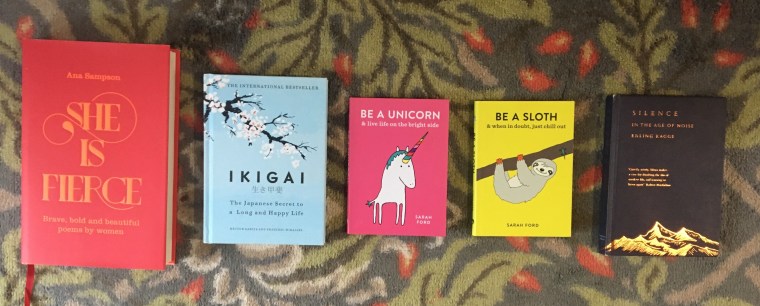
 Curated by Ana Sampson, She is Fierce is a beautiful, important, anthology for women in the modern world. The poems are categorised into sections on childhood, friendship, love, nature, wellbeing, society, bravery and endings. The thematic compilations include poems by women that span centuries, each one as valued as the next. From poets such as Emily Dickinson, Maya Angelou, Wendy Cope and Dorothy Parker, styles and topics are diverse and varied but each poem provides inspiration, comfort, belonging and solidarity. These poems remind women of where we came from and how far we have left to go, honouring our passions, relationships and bodies. Women, girls, mothers, daughters, wives and partners are celebrated for their individuality, their courage and their power. This compendium is an important companion as the fight for gender equality continues.
Reading poetry silently is intimate, personal and comforting. But reading poetry aloud is powerful, motivational and exhilarating. Hearing your voice speak the words allows your body to feel the rhythms and a connection is formed between mind, voice, body and soul. This connection is compelling and grounding, the focus is on the individual reaction, fostering a greater understanding of the self and its emotions in moving towards self-care.
Ikigai: The Japanese Secret to a Long and Happy Life
Hector Garcia and Francesc Miralles, 2017
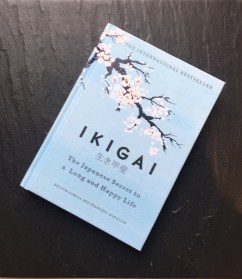
In Ikigai, Garcia and Miralles explore and explain the mysteries of the eponymous Japanese word. They map the secrets to a long and happy life, focussing on meaning, fulfilment, joy and purpose. The research derives from a focus on the Japanese town of Ogimi, which has one of the highest percentages of supercentenarians (people over the age of 100) in the world. Ikigai reveals how the Japanese way of life fosters longevity and joy through lifestyle choices that emphasise community, positivity, purpose, flow and movement.
Garcia and Miralles explain how finding our Ikigai will aid us in finding meaning in life, and that this meaning inherently provides a purpose that we want to live for, making way for the opportunity to live for longer. Ikigai is the reason to want to leap out of bed and succeed in the day. The notion of Ikigai is almost revolutionary in the western world – as instead of searching for purpose in success and commercial wealth, success is finding purpose in life that resides in simplicity and joy.
Be a Sloth: and when in doubt just chill out
Sarah Ford, 2018
Be a Unicorn: and live life on the bright side
Sarah Ford, 2017
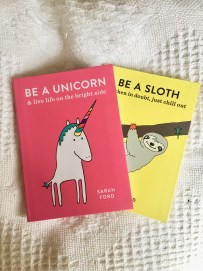 These little books should not be dismissed as trivial or silly. Instead, they simply offer fun and realistic suggestions to live positively (like a unicorn) and to not be afraid to relax and chill out (like a sloth). With entertaining cartoon drawings and one-line captions, Sarah Ford’s books offer truthful comments on gaining perspective and regaining control of life choices. For example, sentences such as ‘Unicorn thought it was better to look at the rainbow than waste time looking for gold’ and ‘Unicorn decided to wear the bikini’ encourage others to embrace life more positively and to embrace themselves fully. Equally, captions such as ‘Sloth found sticking to his vegan diet a little tricky’ and ‘Sloth thought it was a mistake to underestimate the power of slow’ remind us that its okay to give ourselves a break, that we are not perfect and that in itself is a wonderful thing.
These captions, accompanied with little sketches and scenes, provide a genuinely entertaining and humorous read – offering out-loud laughs and instant reminders of enacting self-care.
Books:
Silence: In the Age of Noise, Erling Kragge, RRP £8.99
She is Fierce: Brave, bold and beautiful poems by women, Ana Sampson, RRP £12.99
Ikigai: The Japanese Secret to a Long and Happy Life, Hector Garcia and Francesc Miralles, RRP £12.99
Be a Sloth: and when in doubt just chill out, Sarah Ford, RRP £5.99
Be a Unicorn: and live life on the bright side, Sarah Ford, RRP £5.99
Articles about Self-Care:
How can I help myself with mental health problems?, Mind, 2018.
The importance of self-care, Ted talk podcast playlist.
Practicing Self-Care is important: 10 Easy Habits to get you started, Forbes, 2017.
The Politics of Conspicuous Displays of Self Care, The New Yorker, 2017.
Generation Treat yo’ self: The problem with ‘Self-Care‘, The Guardian, 2017.
Stop Pressurising Me to take care of myself, Vice, 2016.
For many people with anxiety, Self-Care just doesn’t work, Healthline, 2018.
All pictures are my own unless otherwise credited. Permission must be obtained before any reproduction and credit must be issued in any reproduction.
 Under The Cypress Tree