

This summer has felt particularly long. Perhaps it’s because we’ve had intermittent heatwaves since April, but it’s more likely because we’ve been locked-down at home with only our daydreams of holidays yore and hopeful plans for future getaways.
Experiencing an alternate summer in literature, however, is the the ultimate way to escape: the heat-induced boredom leading to sweaty, sultry decisions; the slower pace forging the opportunities for pensive thoughts; the sense of madness, other-worldliness, oppressiveness and excitement. It all comes together in a literary haze that transports you from your own sense of idle summertime.
Whether you’re ready for the summer to end, or grasping at the last straws of long days and balmy nights, here are some of the best books that encapsulate the midsummer madness and that are set in intense, hazy heat. What better way to send off the long, hot summer of 2020.
Atonement, Ian McEwan (2001) 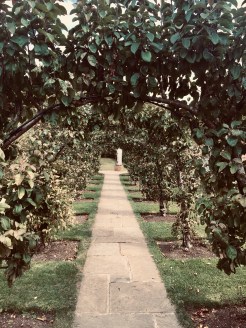
“Cecilia led the visitors into the drawing room, through the French windows, past the roses toward the swimming pool, which was behind the stable block and was surrounded on four sides by a high thicket of bamboo, with a tunnel-like gap for an entrance. They walked through, bending their heads under low canes, and emerged onto a terrace of dazzling white stone from which the heat rose in a blast. In deep shadow, set well back from the water’s edge, was a white-painted tin table with a pitcher of iced punch under a square of cheesecloth. Leon unfolded the canvas chairs and they sat with their glasses in a shallow circle facing the pool”
Set over three time periods, Atonement opens in a typical British heatwave. The stillness is oppressive, the boredom is apparent and the distorted haze of the summer evening leads passion-induced decisions and petulance-driven mistakes that propel the characters into a life-changing stream of events.
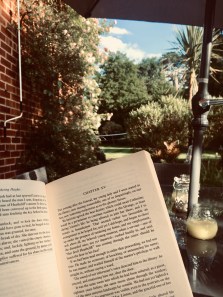
The Member of the Wedding, Carson McCullers (1946)
“It happened that green and crazy summer when Frankie was twelve years old. This was the summer when for a long time she had not been a member. She belonged to no club and was a member of nothing in the world. Frankie had become an unjoined person who hung around in doorways, and she was afraid. In June the trees were bright dizzy green, but later the leaves darkened, and the town turned black and shrunken under the glare of the sun”
Frankie Addams longs to belong. As a twelve-year-old in a southern American state, she is bored, lonely, isolated and uncomfortable in her own skin. Set over a few days mid-August, The Member of the Wedding is often seen as a coming-of-age novel, but it is also a deeper reflection on the struggles of growing up, the vulnerability of a pre-teen girlhood as well as an exploration of race and sexuality through the eyes of a child.
A Room with a View, EM Forster (1908) 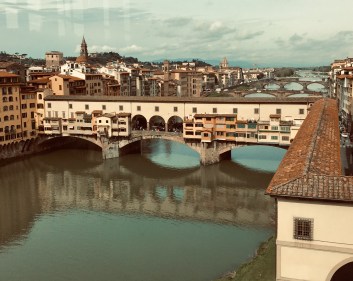
“It was pleasant to wake up in Florence, to open the eyes upon a bright bare room, with a floor of red tiles which look clean though they are not; with a painted ceiling whereon pink griffins and blue amorini sport in a forest of yellow violins and bassoons. It was pleasant, too, to fling wide the windows, pinching the fingers in unfamiliar fastenings, to lean out into sunshine with beautiful hills and trees and marble churches opposite, and close below, the Arno, gurgling against the embankment of the road.”
A light-hearted critique of Edwardian society disguised as a romance, A Room with a View is set in both Florence, Italy and Surrey, England. The pages are filled with courtship, travel, tennis and tea as E.M. Forster epitomises social decorum and the shallow values of the upper classes in the early twentieth century.
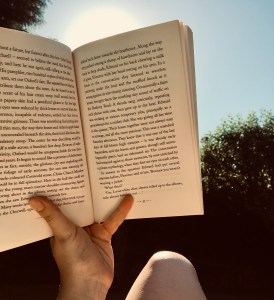 To Kill a Mockingbird, Harper Lee (1960)
“Summer was our best season: it was sleeping on the back screened porch in cots, or trying to sleep in the treehouse; summer was everything good to eat; it was a thousand colors in a parched landscape; but most of all, summer was Dill.”
To Kill a Mockingbird is a modern, and much loved, classic. Often read at school-level, returning to it as an adult feels warm and nostalgic. It is classed as a Southern Gothic, taking place in Alabama and follows three children over three years. While the plot follows Scout, Jem and Dill’s adventures, and their fascination with their reclusive neighbour, Boo Radley. The subplot, however, concerns a trial in which Scout and Jem’s father is hired to defend a black man accused of rape. A Bildungsroman with themes of racial injustice, innocence and childhood, this classic is the perfect summer read.
Holes, Louis Sachar (1998)
“Looking around, he saw a pool of water less than a hundred yards away from
where he was standing. He closed his eyes and opened them to make sure he wasn’t imagining it. The pool was still there. He hurried toward it. The pool hurried away from him, moving as he moved, stopping when he stopped. There wasn’t any water. It was a mirage caused by the shimmering waves of heat rising off the dry ground.”
After being falsely accused of theft, Stanley Yelnats, is send to Camp Green Lake, a juvenile detention centre in a Texan desert. Crawling with yellow-spotted lizards, inmates at Camp Green Lake must dig one hole each day: five metres wide and five metres deep. Holes is YA fiction but it explores themes illiteracy, homelessness and racism.
 The Color Purple, Alice Walker (1982)
“Just when I think I’ve learned to live with the heat, the constant dampness, even steaminess of my clothes, the swampiness under my arms and between my legs, my Mend comes. And cramps and aches and pains? but I must still keep going as if nothing is happening”
Set in rural Georgia in the early 1930s, The Color Purple is an award winning book that confronts the exceptionally low position of African-American women in American society. Written in letters to God by 14 year-old Celie, this is a poignant, affecting and important text that not only revolutionised the epistolary form, but more importantly unlocked conversations about black women in western society, particularly the injustice and the abuse that they faced.
The Great Gatsby, F. Scott Fitzgerald (1925) 
“There was music from my neighbour’s house through the summer nights. In his blue gardens men and girls came and went like moths among the whisperings and the champagne and the stars.”
The roaring 20s: hedonism, luxury, debauchery and extravagance. It is hard to distinguish whether The Great Gatsby epitomises this era, or whether the era now epitomises the text – it is almost as if they are so interlinked it is difficult to conceptualise that one happened without the other. Often considered one of the greatest novels of all time The Great Gatsby follows Yale graduate and hopeful salesman, Nick Carraway, to New York, where he spends the summer on Long Island and enters the world of Jay Gastby.
All pictures are my own unless otherwise credited. Permission must be obtained before any reproduction and credit must be issued in any reproduction.
 Under The Cypress Tree